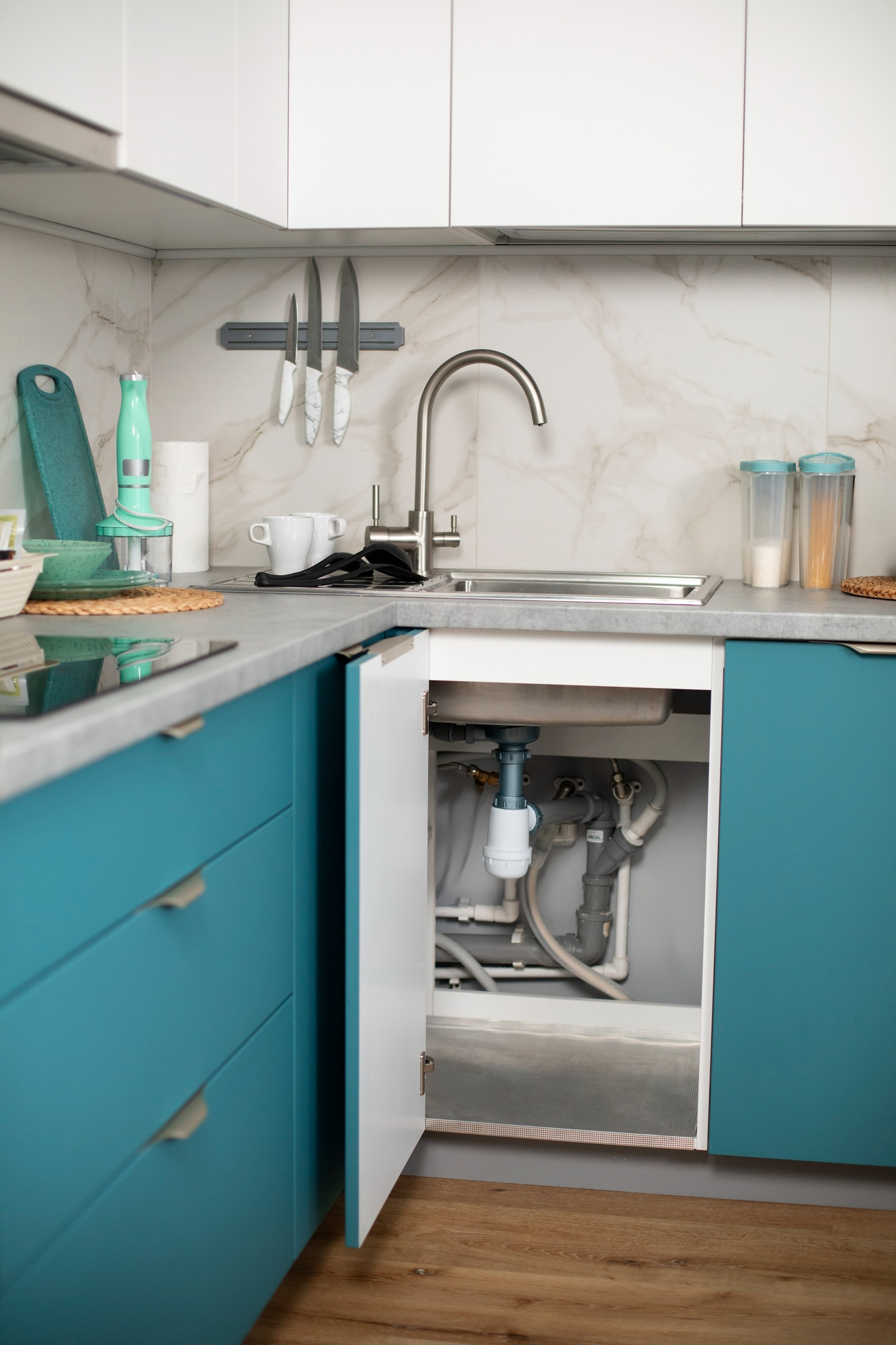
Cleaning kitchen drains doesn’t have to involve harsh chemicals that can harm your plumbing and the environment. In Austin, where sustainability is important, there are simple and effective natural methods that keep your drains clean and your plumbing system in top shape. Here, we’ll walk you through the best chemical-free ways to clean and maintain your kitchen drains.
Sommaire
ToggleUse baking soda and vinegar
Baking soda and vinegar are two of the most effective and natural ingredients for cleaning kitchen drains. The combination of these two ingredients creates a fizzing reaction that helps break down grease, food particles, and other debris stuck in your pipes. This method is a simple yet powerful solution for maintaining clear drains without resorting to chemical drain cleaners.
How to use baking soda and vinegar
- Pour 1/2 cup of baking soda down the drain, followed by 1/2 cup of vinegar.
- Cover the drain to contain the fizzing action inside the pipe, allowing it to work for 15–20 minutes.
- After the time has passed, flush the drain with hot water to clear away loosened debris.
Why it works
The baking soda acts as a mild abrasive, scrubbing the pipes clean, while the vinegar helps dissolve grease and grime. Together, they create a natural cleaning solution that effectively breaks down organic material, leaving your drains clear and odor-free.
Hot water flush
Flushing your drains with hot water is one of the simplest and most effective methods for maintaining clean pipes. Hot water helps dissolve grease, food residue, and soap scum that often accumulate over time. This method is ideal for keeping your drains clear and preventing minor clogs from developing into larger issues.
How to use hot water to clean drains
- Boil a pot of water and carefully pour it down your kitchen drain in stages.
- Allow the hot water to flow through the pipes, breaking down and washing away any buildup.
Why it works
Hot water helps melt grease and oils that can solidify inside your pipes, allowing them to be flushed out. This quick and easy method helps keep your drains running smoothly without the need for chemicals.
Use a drain snake or plumbing auger
A drain snake or plumbing auger is a helpful tool for addressing more stubborn blockages deep inside your pipes. Unlike other methods, the drain snake physically removes clogs by reaching deep into the plumbing system. This is especially useful for clearing away debris that may not be easily dislodged with water or natural cleaners.
How to use a drain snake
- Insert the drain snake into the drain opening and turn the handle clockwise.
- Continue rotating the snake until you feel resistance, indicating that you’ve hit the blockage.
- Keep turning to break up the clog and pull out any debris that’s causing the issue.
Why it works
The drain snake provides a direct mechanical solution to blockages, allowing you to physically clear the debris from your pipes. It’s an effective option for more stubborn or deep-seated clogs that can’t be easily cleared by natural cleaning methods.
Use salt and baking soda
For a more abrasive cleaning method, combining salt and baking soda can help remove minor clogs and freshen up your drains. This mixture works well for loosening up grease, soap scum, and other materials that build up in the pipes over time.
How to use salt and baking soda for cleaning
- Pour 1/2 cup of salt and 1/2 cup of baking soda down the drain.
- Let it sit for about 15 minutes, allowing the salt and baking soda to work through the pipes.
- After 15 minutes, flush with hot water to clear the debris.
Why it works
Salt acts as a gentle abrasive to scrub the inside of your pipes, while baking soda neutralizes odors and helps break down any grease or sticky residue. Together, they create a natural solution for keeping your drains fresh and clear.
Regular maintenance with a lemon
For a fresh, clean drain, lemons are a natural and effective solution. The acidity of lemon juice helps to break down grease, while its citrus scent naturally deodorizes your drains, leaving them smelling fresh. This method is ideal for maintenance and odor control.
How to use lemon for cleaning drains
- Cut a lemon into small pieces and drop them into the drain.
- Run hot water to push the lemon through the pipes or grind it in the garbage disposal for a refreshing clean.
Why it works
The acidic properties of lemon help dissolve grease and organic material, while its citrus scent keeps your drains smelling fresh. This is an excellent way to naturally clean your drains without relying on chemicals.
Preventive measures: use drain covers
Preventing debris from entering your drains is one of the best ways to avoid clogs in the first place. Drain covers or mesh strainers act as a barrier to catch food particles, hair, and other debris before they enter your pipes. This makes routine cleaning much easier and reduces the likelihood of blockages.
How drain covers help prevent clogs
- Place a strainer over your kitchen drain to catch food scraps and debris.
- Clean the drain cover regularly to ensure it stays effective.
Why it works
Drain covers help prevent large food scraps, hair, and other debris from entering the pipes, making it easier to maintain a clog-free drainage system. Regular use of these covers will reduce the frequency of more intensive drain cleaning.
Read more : The benefits of hydro jet drain cleaning in Austin
Cleaning your kitchen drains without chemicals is not only eco-friendly but also effective in maintaining a healthy plumbing system in your Austin home. Using simple household ingredients like baking soda, vinegar, and hot water, you can keep your drains clean without the need for harsh chemicals. Regular cleaning, along with preventive measures like drain covers, will ensure that your plumbing stays functional and free of clogs, saving you from costly repairs and keeping your drains running smoothly year-round.